
● Economic Boom Ignites Wealth Explosion
Practical Guide to Transforming YouTube into a Personal Knowledge Base with NotebookLM —What’s Included: Setup Steps, Recommended Extensions, Key Prompts, Workflows for Immediate Use in Work, and Key Risks and Economic Implications from a Productivity and AI Trend Perspective
Key Summary (At a Glance)
Outlined step-by-step is the method to convert YouTube videos into ‘reusable knowledge’ using NotebookLM.
Shared tips for moving entire playlists at once with browser extensions and working around NotebookLM’s 50-source limit.
Examples of practical prompts such as learning coach-style prompts, managing completion marks, and extracting conflicting opinions are provided.
Lastly, the impact on productivity enhancement and economic implications related to AI trends (digital transformation, technological innovation) from a corporate education and upskilling perspective are explained.
Why turn YouTube into a Knowledge Base?
YouTube is the largest pool of educational content.
However, repetitive consumption without retention eliminates economic value.
Using NotebookLM allows you to operate video, summary, and Q&A in one workspace.
This shortens learning time and increases the reuse rate of knowledge, directly contributing to personal and corporate productivity enhancements.
From an AI trend perspective, personalized knowledge management is a core driver of digital transformation.
Setup Stage — A Step-by-Step Guide for Practitioners to Follow Immediately
1) Organize and Select Playlists
First, organize existing playlists.
Considering the NotebookLM constraint of a maximum of 50 sources per notebook, compress the list of videos below 50 according to priorities.
Create new playlists per topic to clearly define the ‘move target.’
2) Utilize Extensions
It is inefficient to insert individual links one by one.
Using an extension like ‘YouTube to NotebookLM’ allows importing entire playlists at once.
Check if it works on Brave, Chrome, and Edge, and pre-set browser permissions.
3) Design Notebook Structure
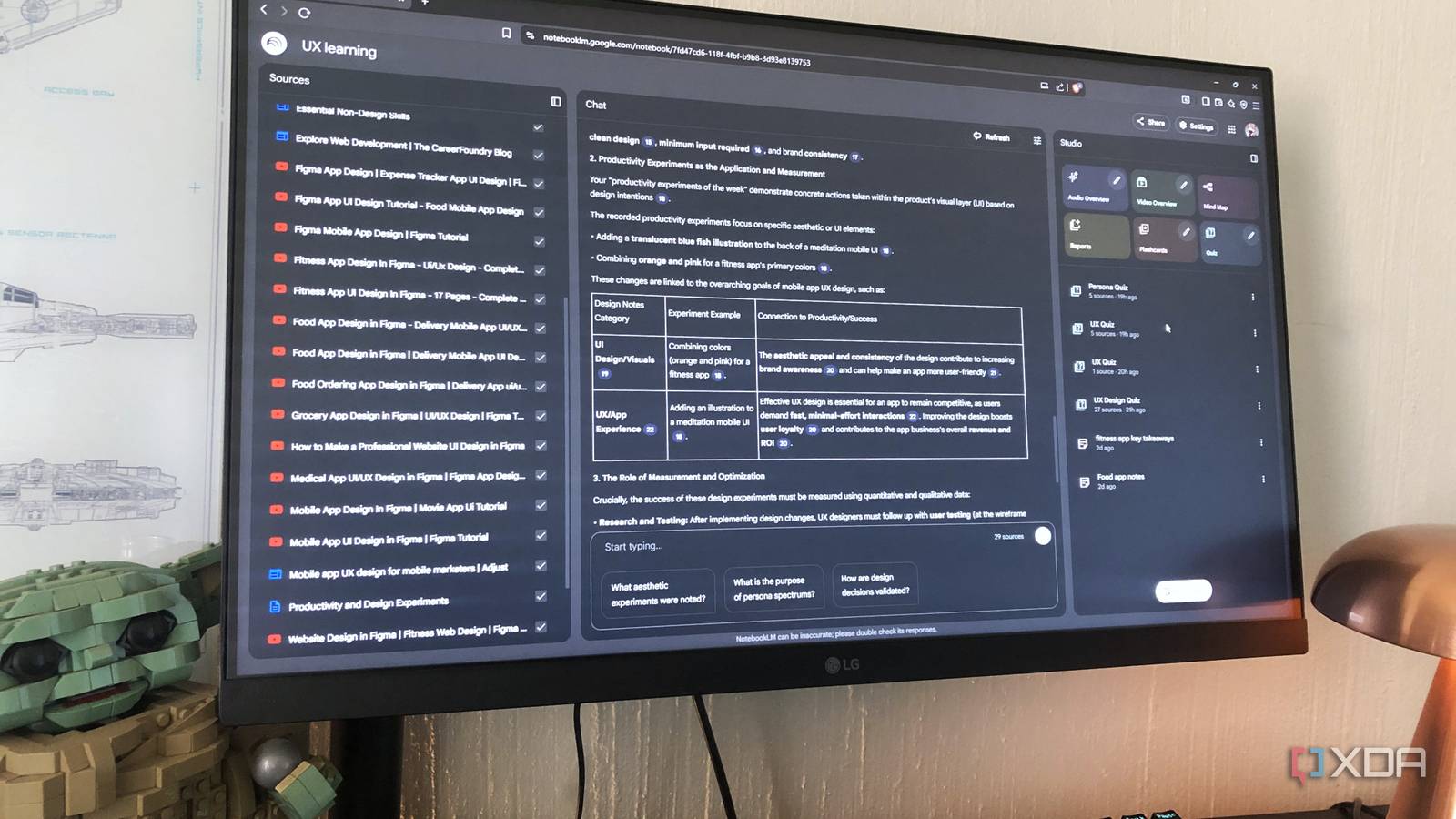
Divide notes by topic (e.g., Figma, UX, psychology) and design a learning path of beginner-intermediate-advanced.
Apply tags like ‘Completed’, ‘Important’, and ‘Pending’ to each video to make it easy to filter later with prompts.
Usage — How to Use NotebookLM as a ‘Learning Coach’
Start with the basic summary.
Quick indexing is possible with simple prompts like “Summarize the key concepts from these videos in less than 10 sentences.”
Recommended Prompts (Examples)
- “Create a learning roadmap from beginner to intermediate based on the selected sources on [topic].”
- “Select the top 3 videos that best explain [topic] comprehensively from these sources and explain why.”
- “Extract conflicting claims or tips from these videos and briefly summarize each creator’s argument.”
View-Note-Query Loop
NotebookLM provides a video player, AI chat, and a note panel simultaneously.
While watching a video, immediately ask questions, convert answers into notes, and save them.
This loop compresses the ‘read-organize-apply’ cycle of learning.
Useful Workflows in the Field (e.g., L&D, Personal Upskill)
Corporate Education (L&D) Use
Insert key videos into a team-exclusive notebook and curate with role-specific (development, design, sales) tailored prompts.
To measure time-to-learning effectiveness, create ‘pre-post quiz’ templates that automatically evaluate based on summarized key points.
Personal Growth and Portfolio Use
Summarize learned content into an ‘actionable checklist’ usable for resumes or portfolios, leading to employment and project opportunities.
Crucial Insights That Other Media Rarely Mention
1) Strategic Use of the 50-Source Limit
The 50-source limit of NotebookLM may seem like a downside, but it acts as a ‘force for curation.’
In other words, it helps develop a habit of editing and refining videos focusing on quality over quantity.
This enhances cost-effectiveness when companies build L&D content pools.
2) The Economics of ‘Completed’ Tags
Moving beyond a simple checklist, managing the learning history with a ‘Completed’ tag can reduce redundant learning and save relearning costs.
Companies can improve human capital efficiency by linking this data with employee capability evaluations.
3) Research Value of Extracting Conflicting Information
By automating the comparison and summarization of contrasting advice on the same topic, rapid meta-analysis becomes feasible.
This reduces time and costs in decision-making processes such as product planning, policy review, and risk assessment.
4) Management of Privacy and Copyright Risks
Ignoring issues of video copyright and personal learning data privacy can lead to regulatory risks.
When introducing it for corporate use, prepare internal guidelines, access control, and log management policies together.
Economic and AI Trend Perspective
In an era of digital transformation and technological innovation, knowledge management capability is key to competitiveness.
Transforming open knowledge such as YouTube into internal assets reduces education and re-education costs for individuals and organizations.
This directly leads to productivity improvements and may also be a factor in alleviating structural unemployment by accelerating re-education in the labor market.
Furthermore, tools like NotebookLM showcase how the AI trend contributes to ‘cost efficiency’ of knowledge work.
At the corporate level, the automation of L&D is likely to establish itself as a practical means to enhance the ROI of human capital.
Execution Checklist (Follow in Sequence)
1) Organize existing playlists → Select 3 priority topics.
2) Compress sources to below 50 per topic.
3) Install extension (e.g., YouTube to NotebookLM) for bulk import.
4) Apply learning roadmap generation prompts per notebook.
5) Assign completion and priority tags.
6) Regularly execute ‘remove duplicates’ and ‘archive vs. delete’ prompts.
7) Establish privacy and copyright guidelines when applicable to companies.
Cautions and Limitations
Though NotebookLM is powerful, always be mindful of the 50-source limit and model interpretation errors.
Automated summaries might miss core points, so maintain a procedure to verify the original when used as a basis for critical decisions.
Additionally, when using extensions, manage browser permissions, cookies, and login sessions securely.
In corporate environments, it is essential to build access controls and audit logs in integration with internal policies.
Conclusion (Implementation Recommended)
In an era where the influx of information from YouTube is surging, simple consumption is a waste of value.
Converting videos into structured knowledge through tools like NotebookLM can yield tangible benefits of productivity enhancement and cost savings for both individuals and organizations.
In environments where AI trends and digital transformation accelerate, knowledge management capability equates to competitiveness.
[Related Articles…]
Advanced Knowledge Management with NotebookLM (Summary)
YouTube-Based Learning Strategies: Digital Transformation of Corporate Education (Summary)
*Source: https://www.xda-developers.com/build-personal-knowledge-base-with-youtube-and-notebooklm/
Leave a Reply