
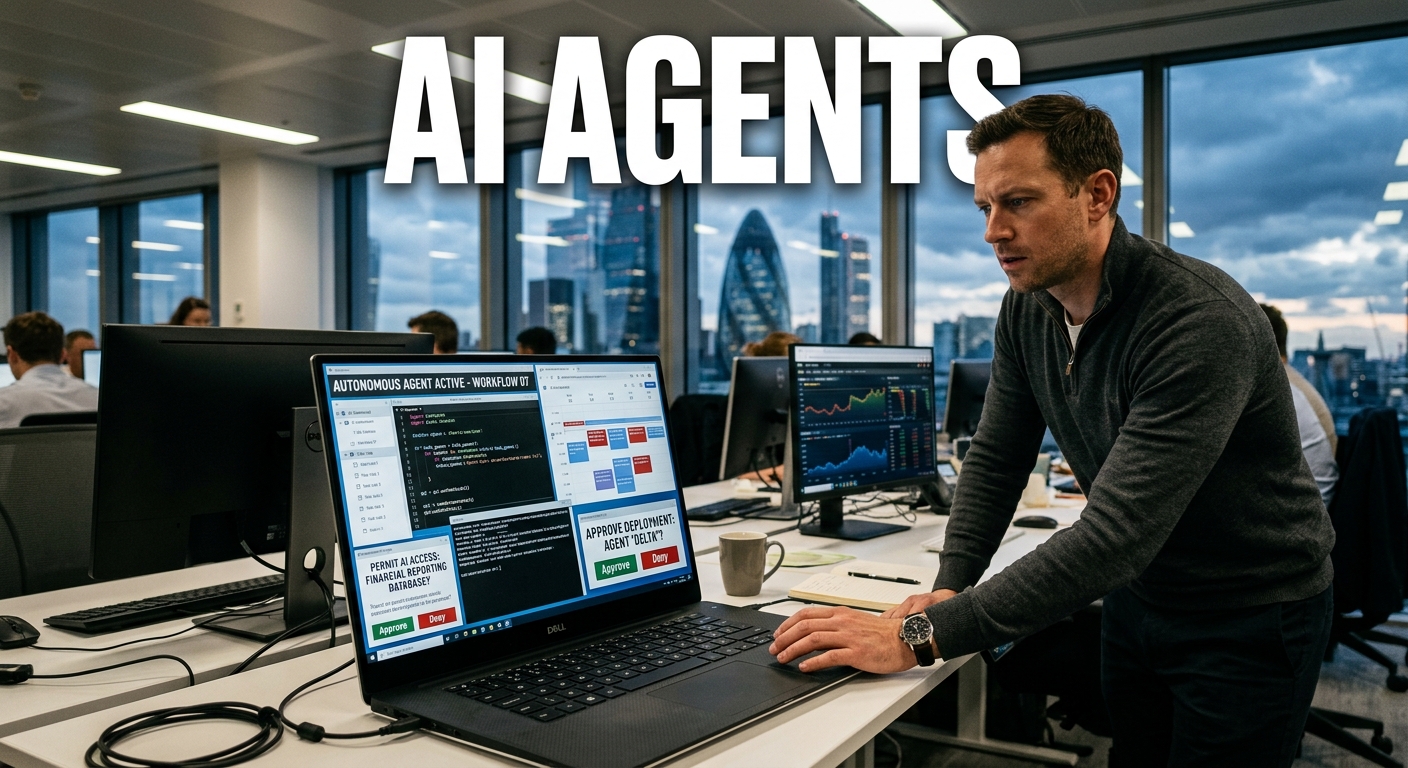
● AI Agents Overthrow Software Workflows
What we are covering today is not just a simple software update. It is a massive piece of news that will completely overturn the way we work. In this post, in particular, I will completely uncover the ‘real market changes’ and ‘hidden risks’ that general news or YouTube only scratch the surface of. Hints on how non-developers can use AI to work like a one-person enterprise, and how our work environment will change in the future, are all contained in this text. Let’s break down the news of the Codex update from OpenAI, which leads the latest artificial intelligence trends, in the easiest way to understand right now.
OpenAI Codex Massive Update: Everything in Software Development in One Place
Recently, OpenAI massively updated the ‘Codex desktop app (macOS, Windows)’ used by more than 3 million developers weekly. Now, beyond simple code writing, an era has opened where AI directly operates my computer and even schedules long-term tasks spanning several days on its own. I will neatly summarize only the key takeaways in a news format so that even busy professionals can understand them at once.
1. Background Computer Control and Parallel Processing
The most shocking feature of this update is that AI directly clicks, types, and navigates my computer. Even in legacy programs or general apps that do not support APIs, it brings up an AI-exclusive cursor to test and perform repetitive tasks on its own. Especially on Mac, multiple AI agents can work in parallel in the background simultaneously, so while I am doing other work, the AI modifies the front-end and tests the app on its own. This can be seen as the first step toward realizing perfect work automation in the truest sense.
2. Visual Workflow and In-App Browser Integration
Now, telling AI to “design a website” is not the end of it. Equipped with the ‘gpt-image-1.5 model’, it generates product concepts, front-end mockups, and even game visuals all at once within the app based on screenshots or code. Moreover, an in-app browser is included, allowing you to give highly intuitive instructions to the AI, such as “change the button color here,” by adding annotations directly on the webpage.
3. Over 90 Plugins and Development Environment (IDE) Innovation
With the addition of over 90 plugins, including Jira (Atlassian), GitLab, and Microsoft Suite, AI has come to perfectly grasp the context of company work. For developers, it not only executes multiple terminal tabs and connects to SSH remote servers, but also allows opening rich previews of PDFs or spreadsheets right in the sidebar. The entire ecosystem, from writing code to checking results and collaborating with colleagues, has been integrated into a single workspace called Codex.
4. ‘Long-Term Memory’ Spanning Weeks and Task Scheduling
The frustration of losing the context when you close the window while talking to AI is now over. Thanks to the ‘Memory Preview’ feature, Codex remembers all of my personal work tendencies, past revision histories, and collected information. Even when I step away, it schedules future tasks on its own to seamlessly continue projects spanning days or even weeks. For example, it checks feedback comments on Google Docs, looks up related conversations on Slack, and proceeds with revision tasks according to priorities.
💡 The ‘Real’ Key Takeaway Insights That Others Do Not Talk About (Must Read)
General IT news or YouTubers only talk about how “coding has become easier,” but there is a real, in-depth analysis going back and forth among active developers and the Silicon Valley community (Hacker News). I will reinterpret from my perspective how this change will affect the global economic outlook and how it will change our professional environment.
1. The True Beneficiaries are ‘Non-Developers’, Not Developers
The ones benefiting the most from this wave of the Fourth Industrial Revolution are actually ordinary people who do not know how to code. Professional developers already know how to write their own automation scripts, but planners or marketers did not. But now, it is an era where if you toss it emails and meeting minutes, the AI automatically plans a social media campaign, sets it up, and even writes a summary report. As AI agents take full charge of software manipulation instead of humans, non-developers can now achieve the productivity of a one-person enterprise.
2. The Era Where ‘Code’ is Hidden and ‘Prompts’ Become Assets
In the next 3 to 5 years, the usage rate of traditional IDEs (Integrated Development Environments) is highly likely to plummet. Looking at recently updated AI UIs, there is a strong common tendency to hide complex ‘code’ from the user’s eyes. Instead, ‘prompts’ given by humans in natural language are becoming the true source code, and actual programming languages are being reduced to bothersome intermediate outputs. It means the level of abstraction has gone up one step further.
3. Collapse or Reorganization of the B2B SaaS Market
Currently, companies are using numerous B2B SaaS programs (Slack, Notion, Jira, etc.) with their respective interfaces. However, if AI directly controls my computer, humans no longer need to learn complex software UIs. As natural language conversational LLMs establish themselves as the ‘best UI/UX’, the existing software market structure will fundamentally change. I believe an ecosystem reorganization will occur where only backend-centric SaaS that supports data connections well will survive.
4. The ‘Security Risks’ Hidden Behind Maximized Convenience
The fact that AI moves and clicks my computer’s mouse means, conversely, that ‘full access permission’ to the computer has been handed over to the AI. In particular, anxiety is prevalent within the community that AI might read and learn a company’s sensitive files or codes without the user knowing. A massive debate has just begun on whether to give up sandbox security for convenience, or to endure inconvenience for security.
< Summary >
This massive update to OpenAI’s Codex app is not merely the evolution of a coding assistance tool. AI has reached the level of directly controlling the user’s computer, generating images, and scheduling long-term projects on its own. Combined with a web browser and over 90 work plugins, all development and tasks can be handled in a single workspace. However, hidden behind this are massive market changes: an ecosystem reorganization centered on natural language rather than code, a productivity explosion for non-developers, and serious security and permission hijacking risks.
[Related Articles…]The Era of AI Agents, Are My PC’s Security Permissions Safe?
Future Survival Strategies for the B2B SaaS Market to be Devoured by LLMs
*Source: https://news.hada.io/topic?id=28614
● AI Agent Revolution
The news I brought today is a massive event that goes beyond simple IT news and will completely change the way we work and the value of companies.
It is about the newly announced ‘Codex’ update by OpenAI.
If you just read this single article to the end, while others simply say “the coding AI got smarter,” I have compiled everything so that you can perfectly grasp the future of the changing work environment, the changes in the profit structures of global companies, and the hidden investment points that others are missing.
Now, let’s dive straight into the real core points that will directly affect our daily lives and wallets.
[News Briefing] OpenAI Codex Evolves Beyond a Coding Assistant into an ‘Autonomous Employee’
1. The Emergence of an AI Agent That Directly Controls My Computer
OpenAI has completely revamped ‘Codex,’ which previously assisted with coding, into an ‘agent-type service’ that operates directly on the user’s computer.
Simply put, this means the AI now resides in the background of my computer, opening, clicking, and operating necessary apps on its own.
It goes beyond merely writing code; an ‘all-around developer’ has effectively entered my PC, autonomously modifying the written code, running test environments, and even handling reviews.
It is equipped with an amazing structure where multiple agents operate simultaneously to process complex tasks comprehensively.
2. Uninterrupted Autonomous Operation and Perfect Integration with Over 100 Collaboration Tools
The most mind-blowing point is precisely the ‘continuity of work.’
Even when we clock out and leave our desks, the AI continues to perform the suspended tasks and persistently handles long-term development projects.
It is even integrated with collaboration tools we use every day, such as Slack, Gmail, and Notion, reading the conversational context to organize tasks on its own or suggest follow-up actions.
An environment has been created where a developer giving verbal instructions while looking at the screen results in code modifications, and everything from UI design to mockups and game production is connected in one shot through the image generation feature.
3. The Desktop AI Dominance War Threatening Anthropic and Google
This trend is also clearly evident in the moves of competitor Anthropic.
Anthropic is also engaging in a head-to-head battle with OpenAI by showcasing a feature that controls the computer on behalf of the user while they are away.
Ultimately, the current competition in the AI market is rapidly shifting beyond who makes a better-talking chatbot to ‘who grasps the control of our work PCs and establishes themselves as the execution agent.’
🚨 [Exclusive Analysis] The ‘Real Core Point Economic Insights’ That Other Media Never Mention
Not a Simple Tech Update, But a Revolution in the White-Collar Labor Cost Structure
Most news outlets or YouTube channels are lightly introducing this Codex update merely as a ‘very convenient automation tool for developers.’
However, from my perspective of tracking business and economic trends, this event holds a completely different meaning.
The fact that an AI communicates via Slack, grasps tasks through Gmail, and codes and tests on its own means that a single AI can integrate and perform the roles of a planner (PM), tester (QA), and developer.
This signifies the beginning of full-scale work automation that will drastically lower companies’ labor cost burdens and explosively boost profit margins.
When we analyze the long-term global economic outlook, the most important factor determining the valuation of companies in the future depends on who can generate high efficiency with the least amount of manpower.
The introduction of agent-type AI like Codex is not a simple tool upgrade, but a powerful productivity innovation that changes the paradigm of labor itself.
Ultimately, this technology will go beyond the IT industry to dominate the desktops of all office workers, establishing itself as the most destructive weapon of the Fourth Industrial Revolution.
It is not just a smart chatbot, but the birth of a ’24-hour digital worker to whom I can entirely delegate my computer.’ This is the key takeaway artificial intelligence trend that we must pay the most attention to from an investment and career perspective.
< Summary >
- Evolution of Codex: Upgraded from a simple coding assistance tool into an ‘autonomous AI agent’ that directly executes and controls apps on the user’s computer.
- Perfect Work Independence: From writing code to testing and modification, it plans and executes its own tasks by integrating with over 100 business apps like Slack and Gmail.
- Desktop Dominance War: The competitive focus of global big tech companies like Anthropic has completely shifted from ‘simple code generation’ to ‘work execution delegation (agents).’
- Hidden Economic Ripple Effect: Beyond simple developmental convenience, this signifies the full-scale opening of the digital workforce era that will innovate the cost structure of white-collar professions and maximize corporate operating profit margins.
[Related Articles…]
- Analysis of the Ripple Effect of AI Agent Adoption on Big Tech Companies’ Operating Profits
- 2026 Global Companies’ White-Collar Work Automation Report
*Source: https://zdnet.co.kr/view/?no=20260417173540
Leave a Reply