

1. 한국 부동산 거래 멈춤 현상
한국 부동산 시장은 2022년 하반기부터 하락세를 보이기 시작했습니다. 특히 2023년 들어 거래량이 급감하며 "거래 절벽" 현상까지 나타났습니다. 이는 공급 과잉, 금리 인상, 내수 경제 침체 등 복합적 요인이 작용한 결과입니다.
-
하락의 주요 이유
- 고금리로 인한 대출 부담 증가
많은 가계가 이미 높은 대출 금리를 떠안고 있어 구매력이 낮아진 상태입니다. - 금융 환경 변화
대출 규제와 정부의 한정된 정책 자금이 부동산 시장을 억제하는 결과를 초래했습니다. - 수출 부진과 기업 불확실성
수출 대기업이 처한 어려운 경제 상황이 고용 및 소득 전망에 부정적 영향을 미쳤습니다.
- 고금리로 인한 대출 부담 증가
-
구매 심리 위축
매수세가 감소하며 실수요자들조차 주택 구매를 미루고 있습니다. "내 집 마련"에 대한 기대보다는 불확실성이 크고, 집값 하락에 대한 불안감이 중앙에 자리 잡고 있습니다.
2. 정부 정책 분석: "둔촌주공 일병 구하기"와 특공정책
-
부동산 떠받치기 정책
정부는 부동산 하락을 막기 위해 신혼부부 특별공급(특공), 생애최초 특별공급 등을 내놓으며, 금리 부담을 덜어주기 위한 다양한 재정 지원책을 강구했습니다.- 예를 들어, 한국은행은 금리를 낮추지 않았지만, 시장 국채 금리를 기획재정부와 국민연금이 조정하며 인위적으로 낮췄습니다.
- 결과적으로 부동산 자산 가격은 일시적으로 반등했으나 실물경제 악화와의 괴리가 커졌습니다.
-
생긴 문제점
- 영끌 대출의 역효과
30대 젊은 층이 대출에 의존해 주택을 구입했으나, 높은 이자 상환 부담으로 소비 여력이 급감했습니다. 이는 내수 침체의 주요 원인으로 작용하고 있습니다. - 세수 감소와 재정 악화
정부는 정책적 자금 지원을 위해 재정을 소진했으나, 세수 감소 현상이 심화되면서 더 이상의 정책 여력이 줄어든 상황입니다.
- 영끌 대출의 역효과
3. 환율과 글로벌 금융 시장의 충격
-
환율 불안정
원-달러 환율이 급등하면서 한국 경제의 대외 신뢰도가 약화되고 있습니다.- 최근 미국 국채 금리는 4.6%에 이르렀으나, 한국은 2.8%대로 유지되면서 환율 차이에 따른 리스크가 증가했습니다.
- 국민연금과 정부 개입을 통한 일시적 환율 방어에도 불구하고, 장기적 안정성이 부족합니다.
-
환율이 부동산에 미치는 영향
환율 상승은 외국인의 국내 자산 투자 매력을 떨어뜨리고, 반대로 국내 자본이 해외 투자로 유출되는 결과를 가져옵니다. 이는 국내 자산 시장, 특히 부동산에 부정적으로 작용합니다.
4. 내년 부동산 시장 전망과 전략적 조언
-
전망
2024년 상반기에도 금리 인하 기대감과 정책적 변화가 부동산 시장 반등의 가능성을 줄 수 있습니다. 하지만 환율과 글로벌 시장의 불확실성이 여전히 고정적인 부정적 요소로 작용할 가능성이 큽니다.- 환율 1,500원 돌파 시 부동산 하락 가능성이 커지며 투자 및 구매에는 신중해야 합니다.
- 현시점에서 부동산 시장은 하방 리스크를 더 많이 내포하고 있다고 판단됩니다.
-
전략적 조언
- 주택 구매: 환율 안정성이 확인될 때를 기다리세요. 환율이 3년 평균치인 1,325원 이하로 안정될 경우, 매매의 적기로 판단될 수 있습니다.
- 단기적 수익 투자: 달러자산, 미국 국채 등 글로벌 안전 자산에 대한 투자가 효과적일 수 있습니다.
- 대출 전략: 금리가 낮아질 것을 과도하게 기대하는 것보다는 현재 금리 수준에서 무리하지 않는 대출을 고려하세요.
5. 결론: 부동산 시장과 실물경제 균형 필요
한국 부동산 시장의 안정성을 회복하려면, 단순히 대출 완화나 지원책이 아닌 실물경제 성장과 연계된 장기적 대책이 필요합니다.
- 부동산 시장으로 쏠렸던 유동성을 산업계로 재분배하며, 경기 체력을 키우는 방향으로 선회해야 합니다.
- 내수 소비를 이끌 주체(30대 중심층)을 회생시키는 것도 매우 중요합니다.
부동산의 본질적 가치는 결국 경제 역량과 직결됩니다. 정부와 개인 모두 단기적 이익에 치우쳐선 안 되며, 장기적 시각에서 지속 가능한 정책과 선택을 해야 할 것입니다.
- Crafted by Billy Yang
[관련글 at NextLens.Net]
*출처 : [월급쟁이부자들TV] 부동산으로 돈 버는 시대는 다시 오기 어려울 겁니다. 상상도 못할 위기가 오고 있어요.(전 KBS 기자. 박종훈)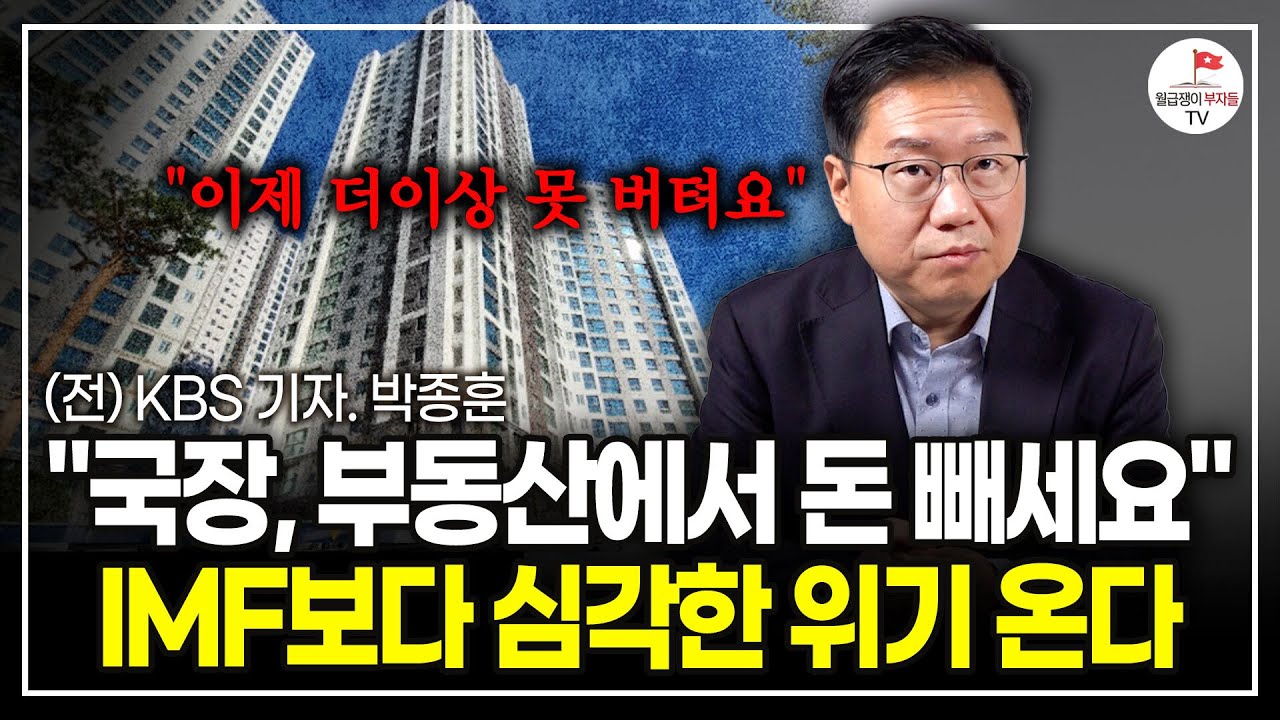
*더보기..[너만모르는 글로벌뉴스] – 신박한 유튜브 요약블로그? https://nextlens.net/
[English Summary]
Current Korean Real Estate Market Check and Policy Background Analysis
1. Korean Real Estate Transaction Stagnation Phenomenon
The Korean real estate market has been on a downward trend since the second half of 2022. Especially in 2023, transaction volume has plummeted, leading to a “transaction cliff” phenomenon. This is a result of a combination of factors, including oversupply, interest rate hikes, and a domestic economic downturn.
-
Major reasons for the decline
- Increased loan burden due to high interest rates
Many households are already burdened with high loan interest rates, resulting in decreased purchasing power. - Changes in the financial environment
Loan regulations and the government’s limited policy funds have led to a suppression of the real estate market. - Sluggish exports and corporate uncertainty
The difficult economic situation faced by major export companies has negatively impacted employment and income prospects.
- Increased loan burden due to high interest rates
-
Weakened buying sentiment
As buying demand decreases, even genuine homebuyers are postponing their home purchases. Uncertainty is higher than the desire to own a home, and anxiety about falling housing prices is central.
2. Government Policy Analysis: “Rescuing Dunchon Jugong” and Special Supply Policies
-
Policies to prop up real estate
The government has introduced special supplies for newly married couples, first-time special supplies, etc. to prevent real estate from falling. It has also devised various financial support measures to ease the burden of interest rates.- For example, the Bank of Korea did not lower interest rates, but the Ministry of Economy and Finance and the National Pension Service adjusted market treasury bond rates, artificially lowering them.
- As a result, real estate asset prices temporarily rebounded, but the gap with the deteriorating real economy widened.
-
Problems that have arisen
- Adverse effects of “Soul-Searching” loans
Young people in their 30s bought homes relying on loans, but their ability to consume has drastically decreased due to high interest repayment burdens. This is a major cause of the domestic economic downturn. - Decrease in tax revenue and worsening finances
The government exhausted its finances to support policy funding, but the phenomenon of decreasing tax revenue has intensified, reducing further policy capacity.
- Adverse effects of “Soul-Searching” loans
3. Impact of Exchange Rates and Global Financial Markets
-
Exchange rate instability
The rapid rise in the won-dollar exchange rate is weakening the external credibility of the Korean economy.- Recently, US Treasury yields reached 4.6%, while Korea has remained at 2.8%, increasing risks due to exchange rate differences.
- Despite temporary exchange rate defense through intervention by the National Pension Service and the government, long-term stability is lacking.
-
Impact of exchange rates on real estate
The rise in the exchange rate lowers the attractiveness of investing in domestic assets for foreigners, and conversely, leads to an outflow of domestic capital into overseas investments. This negatively affects the domestic asset market, especially real estate.
4. Real Estate Market Outlook and Strategic Advice for Next Year
-
Outlook
In the first half of 2024, expectations of interest rate cuts and policy changes may reduce the possibility of a real estate market rebound. However, uncertainties in exchange rates and the global market are likely to continue to act as fixed negative factors.- If the exchange rate exceeds 1,500 won, the possibility of a real estate decline increases, and investment and purchases should be made cautiously.
- At this point, the real estate market is considered to have more downside risks.
-
Strategic advice
- Home purchase: Wait until exchange rate stability is confirmed. If the exchange rate stabilizes below the three-year average of 1,325 won, it may be considered a good time to buy.
- Short-term profit investment: Investing in global safe assets such as dollar assets and US Treasury bonds may be effective.
- Loan strategy: Rather than overly expecting interest rates to fall, consider loans that are not excessive at the current interest rate level.
5. Conclusion: Need for Balance Between Real Estate Market and Real Economy
To restore the stability of the Korean real estate market, long-term measures linked to real economic growth are needed, rather than just loan easing or support policies.
- Liquidity that was concentrated in the real estate market should be redistributed to the industrial sector, shifting the focus towards building economic strength.
- Revitalizing the main body (the 30s core group) that leads domestic consumption is also very important.
The intrinsic value of real estate is ultimately directly linked to economic capacity. Both the government and individuals should not focus on short-term gains, but should make sustainable policies and choices from a long-term perspective.
- Crafted by Billy Yang
[Related Articles at NextLens.Net]
*Source : [월급쟁이부자들TV] 부동산으로 돈 버는 시대는 다시 오기 어려울 겁니다. 상상도 못할 위기가 오고 있어요.(전 KBS 기자. 박종훈)
Leave a Reply