
● Autonomous Lab Automation
AI Has Entered the Laboratory… Anthropic’s MHS Expands the Competitive Landscape of Autonomous Research
Key Takeaways at a Glance
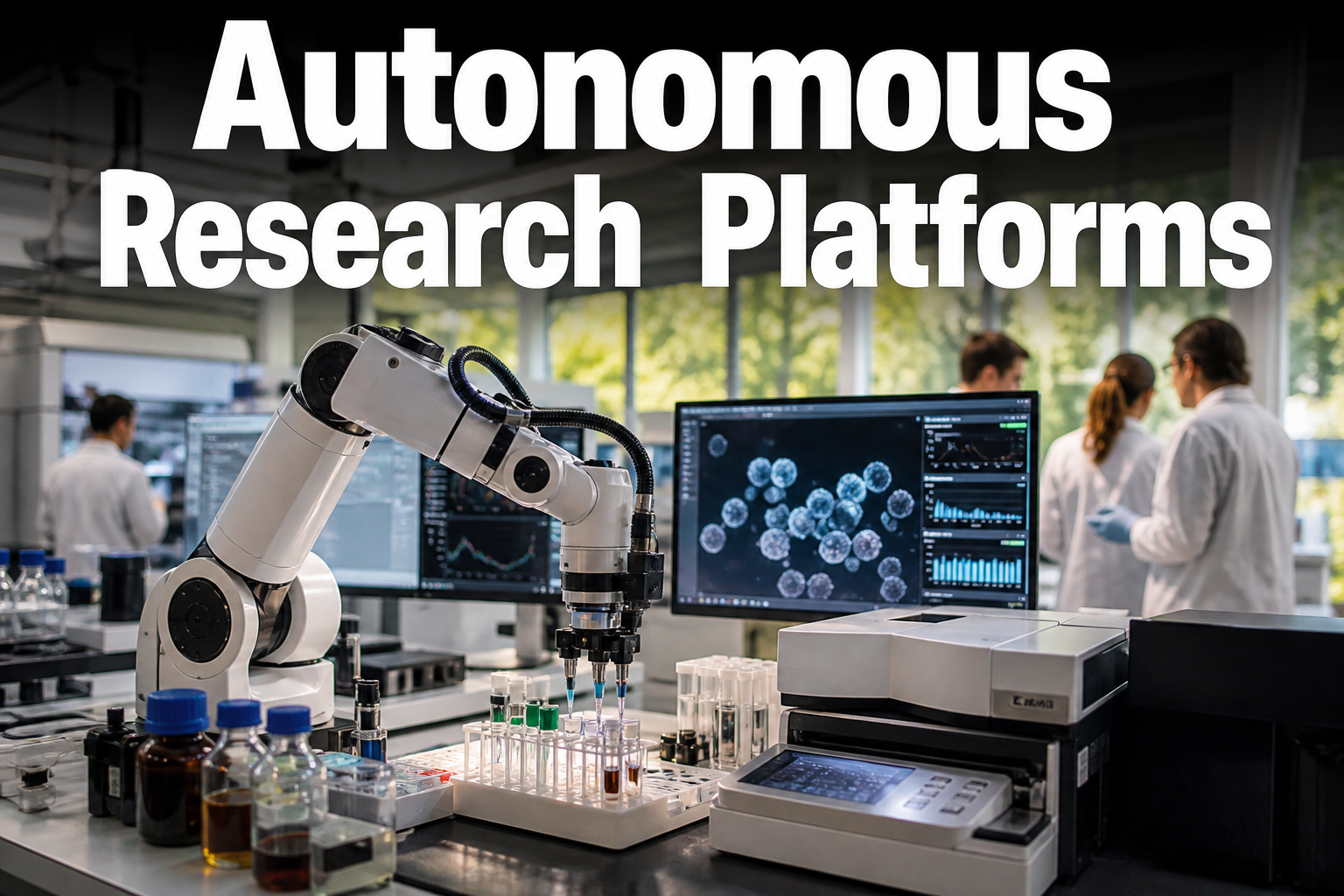
AI agents have now moved beyond document writing and coding into a stage where they directly control microscopes, robotic arms, and liquid-handling equipment.
To support this, Anthropic has released MHS, a connection standard for physical equipment, igniting a standards race around laboratory automation and the AI transformation of manufacturing sites.
OpenAI, Google DeepMind, and Microsoft have already entered the autonomous research race, raising the possibility that AI will become not just a “tool that answers,” but a “colleague that designs and executes experiments.”
In industries with many repeated experiments, such as pharmaceuticals and biotech, semiconductors, batteries, and quantum computing, this could change R&D speed, cost structures, and even the role of research personnel.
Key Points Summarized as News
Anthropic Releases MHS, a Physical Equipment Standard for AI Agents
Anthropic has introduced MHS, a shared standard that connects AI agents with physical equipment such as microscopes, robotic arms, and liquid-handling devices.
The purpose of this standard is to help AI safely control laboratory equipment.
Currently, laboratories and manufacturing facilities use different interfaces for each piece of equipment, so separate integration work is required to use multiple devices together.
This process can take from several weeks to several months, and specialized personnel must create custom connection programs for each device.
Anthropic explained that MHS can reduce this bottleneck and shorten integration time to a matter of hours or even minutes.
AI Moves from Simply “Connecting” Equipment to “Coordinating” It
MHS is not limited to simply turning equipment on and off.
It converts basic commands, such as reading and setting temperature, into a common format, and it is designed so that AI can understand each device’s measurable range and safety limits.
In other words, AI does not handle each piece of equipment separately, but instead views data from multiple devices simultaneously and structures the sequence of experiments.
It also includes the ability to adjust parameters in real time based on experimental results and to detect and recover from some errors without human intervention.
Long-running repeated experiments can be bundled into code files and executed automatically, so the AI does not need to reason again at every step.
The Real Core Point of MHS Is Preventing Dependence on a Specific AI
The most important part of this announcement is not simple automation functionality.
MHS is designed so that it is not tied to a specific AI model.
In other words, the key point is that it is not a standard used only by Claude, but a common protocol that other AI agents can also access.
Anthropic’s existing enterprise connection standard, MCP, is also supported.
If MCP served as a bridge connecting AI with databases and enterprise software, MHS extends that scope to hardware control.
Ultimately, this leads to the question of who will control the standard between AI and hardware.
The Ecosystem Is Already Moving
Early participants are not limited to research institutions.
AWS plans to support MHS through Strands Robots, which connects AI agents with physical equipment.
Danaher, QIAGEN, Tecan, and Universal Robots are also developing or testing related technologies.
In South Korea, Doosan Robotics is applying MHS to its robotic arms and testing automated quality assurance and task coordination among multiple robots.
Hugging Face is adding MHS support to its robotics development library, LeRobot, and Raspberry Pi is also expanding its scope with related products.
This means AI experiment automation is likely to spread beyond laboratories into the broader hardware ecosystem.
OpenAI, Google, and Microsoft Are Already on the Same Battlefield
Anthropic is not the only company moving in this direction.
OpenAI is working with Ginkgo Bioworks to connect GPT-5 to robotic laboratories, testing an autonomous research approach in which AI designs experimental conditions, analyzes results, and then determines the next experiment.
Google DeepMind is pushing research automation through its AI Co-Scientist, where multiple AI agents generate scientific hypotheses and evaluate and revise one another’s ideas.
Microsoft is strengthening its scientific research platform centered on Microsoft Discovery, connecting research data, AI models, and simulations.
In short, the competitive arena is shifting from “how well AI finds information” to “whether AI can actually conduct research.”
Some Industries Will Be Especially Affected by This Change
This technology is not limited to pharmaceuticals and biotech.
It can have a major impact on industries such as materials, semiconductors, batteries, and quantum computing, where repeated experiments are common and changes in conditions are critical.
These industries involve a large number of experiments, complex variables in each experiment, and the need to quickly adjust the next conditions based on results.
If AI can assess results in real time and instruct the next task, R&D timelines can be shortened.
Ultimately, this can create a major difference in time, cost, and research productivity.
The Real Market Changes to Watch
1. AI Is Moving from Software to Hardware
Until now, AI trends have mainly focused on generative AI, coding, documents, search, and workflow automation.
But now AI is entering a stage where it touches the physical world through robotic arms, microscopes, laboratory equipment, and manufacturing equipment.
This trend means the expansion of the AI agent market.
AI is moving beyond knowledge work and beginning to replace or assist parts of physical labor and research labor.
2. The Standards Race Is a Race for Industrial Leadership
A common standard like MHS may look like a technical document on the surface, but in reality, it is a competition for platform leadership.
Depending on who controls the standard, the connection structure among equipment manufacturers, cloud providers, research institutions, and AI models will change.
The side that secures the standard first will act as the gateway between hardware and AI.
In the long term, this is an issue that could change the revenue structure of the AI ecosystem.
3. R&D Efficiency Will Be Directly Connected to Corporate Value
For the pharmaceutical, biotech, semiconductor, and battery industries, experimental speed is ultimately a source of competitiveness.
If AI automates experimental design and equipment control, the pace of discovering new candidate materials, optimizing processes, and improving yields will change.
In other words, AI adoption can be connected not just to cost reduction, but also to corporate research outcomes and earnings.
This will become a fairly important variable when looking at the global economic outlook and corporate performance going forward.
4. The Direction of AI Infrastructure Investment May Also Change
Until now, AI investment discussions have centered mainly on GPUs, cloud computing, and data centers.
But if standards that connect physical equipment become more widespread, the investment scope will expand to robotics, laboratory equipment, sensors, automation software, and industrial networks.
In other words, AI beneficiaries may expand beyond software companies to include industrial automation, robotics, and biotech equipment companies.
The Most Important Points Readers May Miss
On the Surface, the News Is “AI Is Even Conducting Experiments,” but the Real Point Is That “AI Is Trying to Become an Industrial Operating System”
The core point of this news is not simply that “AI has entered the laboratory.”
The real core point is that AI is evolving into something like an operating system that connects data, software, physical equipment, research processes, and industrial standards.
In other words, AI is no longer just a tool that answers questions, but a system that breaks down tasks, determines sequences, moves equipment, and learns again from the results.
In the long term, this is a shift that could change the structure of manufacturing and R&D.
The Second Core Point Is That “Safety” Will Determine the Speed of Growth
MHS is not a technology designed only for convenience.
What is even more important is that AI must understand safety limits, access permissions, and the possible operating ranges of each device.
The moment AI controls physical equipment, malfunctions become not just a cost issue, but a safety issue.
That is why this market will not be driven only by performance competition, but also by who standardizes safety guidelines and verification systems first.
The Third Core Point Is That the Early Market Is More Likely to Open Around “Connection Standards” Than “Laboratory Automation”
It will be difficult for fully automated laboratories to spread widely from the beginning.
Instead, common standards that connect equipment to other equipment are more likely to spread first.
In other words, in the early phase of the industry, connection standards, interfaces, and equipment compatibility may become more important than AI models themselves.
This is the biggest difference from ordinary AI news.
Economic and Industrial Keywords to Watch Going Forward
Points to Watch in Connection with the Global Economic Outlook
If autonomous AI research spreads, corporate R&D speed will accelerate, and productivity gaps across industries may widen further.
As a result, companies with large technological advantages may grow faster, while companies without them may face greater cost burdens.
This change could stimulate the semiconductor cycle, biotech investment, the robotics automation market, and demand for industrial software.
Ultimately, AI investment, digital transformation, industrial automation, robotics, and semiconductor supply chains are moving as one connected trend.
Terms to Watch from the AI Trend Perspective
AI agentsAutonomous researchRoboticsIndustrial automationLaboratory automationStandard protocolsMCPHardware controlR&D innovationPhysical AI
These keywords are likely to appear more often going forward.
In Summary
Anthropic’s release of MHS is not just a technical announcement.
It is a signal that AI is trying to move beyond document and code work into laboratories and factory sites.
OpenAI, Google, and Microsoft are also moving in the same direction, so the autonomous research race is now expanding into a full-scale industrial competition.
Going forward, the more important question may not be “which AI is smarter,” but “which AI can reliably connect to more equipment and systems.”
< Summary >AI agents have begun an autonomous research race in which they control microscopes and robotic arms.Anthropic’s MHS is a standard for connecting physical equipment, and OpenAI, Google, and Microsoft are targeting the same market.The core point is that AI is evolving beyond an answering tool into an industrial operating system.R&D speed and cost structures could change significantly in pharmaceuticals and biotech, semiconductors, batteries, and quantum computing.
[Related Articles…]
- AI Agents and the Future of Autonomous Workflows
- Robotics and Industrial Automation Driving the Next Productivity Wave
*Source: https://zdnet.co.kr/view/?no=20260828102737
Leave a Reply