
● Metas Agent App Sparks AI Execution Rush as Amazon Claps Back
The Shock Created by Meta’s AI Agent “Muse”: Moving Beyond Simple Chatbots Into the Era of “Execution-Based AI”
Meta’s AI agent “Muse” reached No. 1 in iPhone app downloads just 10 days after launch, once again shaking up the flow of investment in generative AI.This trend should not be seen merely as the success of an app, but as a signal that AI has entered a stage where it can go beyond giving good answers and actually handle real tasks such as email, shopping, and travel reservations on behalf of users.On top of that, Meta’s stock surged more than 11% in a single day, and Wells Fargo sharply raised its price target, creating a moment in which both global stock markets and AI trends are being re-evaluated at the same time.In contrast, Amazon blocked Muse’s access to its shopping platform, while Shopify opened up payment integration, signaling that the platform war surrounding AI agents is now entering full swing.In today’s article, we will summarize the core point of this news in a news-style format and also examine the truly important points that are not often covered in other articles.
1. What Is Happening Now: Why Meta’s “Muse” Success Is Shaking the Market
No. 1 in iPhone App Downloads Just 10 Days After Launch
Meta Platforms’ AI agent “Muse,” released on the 8th, ranked No. 1 in iPhone app downloads as of the 21st.What matters is not that this was merely a short-term hit, but that consumers are beginning to accept AI as a tool they can actually “put to use.”Meta already has a massive social media ecosystem, including Facebook, Instagram, and WhatsApp, so the speed at which Muse spreads could become even faster.
Stock Price Surges 11.43%; the Market Responds to AI Monetization
Meta’s stock surged 11.43% during regular Nasdaq trading that day, closing at $741.24.This was not simply a reaction to a successful new product, but a sign that confidence is growing around the idea that “Meta can now make money with AI.”Until now, there had been many concerns that Big Tech’s AI investments involved enormous costs while profitability remained unclear, but Muse’s success has eased a significant portion of that anxiety.
Wells Fargo Raises Price Target from $640 to $796
Wells Fargo sharply raised Meta’s price target from $640 to $796.The core point is simple.Meta is being re-evaluated not merely as a company that owns AI technology, but as a company that can connect AI with actual usage and revenue opportunities.In other words, the interpretation is that Meta is gradually narrowing the gap between AI investment and AI monetization.
2. Why Muse Is Not Just Another Chatbot
Not Conversational AI, but an “Execution-Based AI Agent”
Muse is not a chatbot that simply answers questions.It directly performs everyday tasks on behalf of users, such as sending and receiving emails, shopping, and booking travel.This means AI is shifting from a tool that provides information to a tool that gets work done.
External Service Integration Is the Core Competitive Advantage
Muse is also connected to external services such as email and fitness apps.What matters here is not only the performance of the model itself, but how naturally it can connect with a wide range of services.In the future, AI competition may shift from “who is smarter” to “who can enter more parts of daily life.”
Real-World Usage Data Becomes the Moat
Meta already has massive user touchpoints through social media and messaging platforms.This means AI agents can continuously accumulate usage patterns and execution contexts.Ultimately, data, traffic, and habitual user touchpoints could become the strongest moat in AI competition.
3. What This Issue Means from a Global Stock Market Perspective
The Next Momentum for Big Tech Stocks Is Not the “AI Story” but “AI Monetization”
Today’s market is looking more closely at actual revenue contribution rather than simple AI expectations.Meta’s sharp rise came precisely from this point.Going forward, in global stock markets, the core valuation standard for AI-related stocks, growth stocks, and Nasdaq-centered names is likely to be how quickly AI can be connected to earnings.
A Positive Signal for AI-Related Stocks Overall
If Meta succeeds with an AI agent, the market will naturally begin looking at other platform companies as well.Cloud, semiconductors, data centers, AI software, and e-commerce platforms could all be re-evaluated in a chain reaction.In particular, large technology stocks included in the Nasdaq 100 could see their valuations shift again as AI usage increases.
Investor Attention Is Moving from “Model Competition” to “Distribution Competition”
We are no longer in an era where investors only look at which company has built the largest model.What matters more is who can attach that model to hundreds of millions of users and actually change behavior.From this perspective, Meta has a favorable starting point because it owns a massive distribution network through its social platforms.
4. Why Amazon and Shopify Took Different Paths: The Platform War Around AI Agents
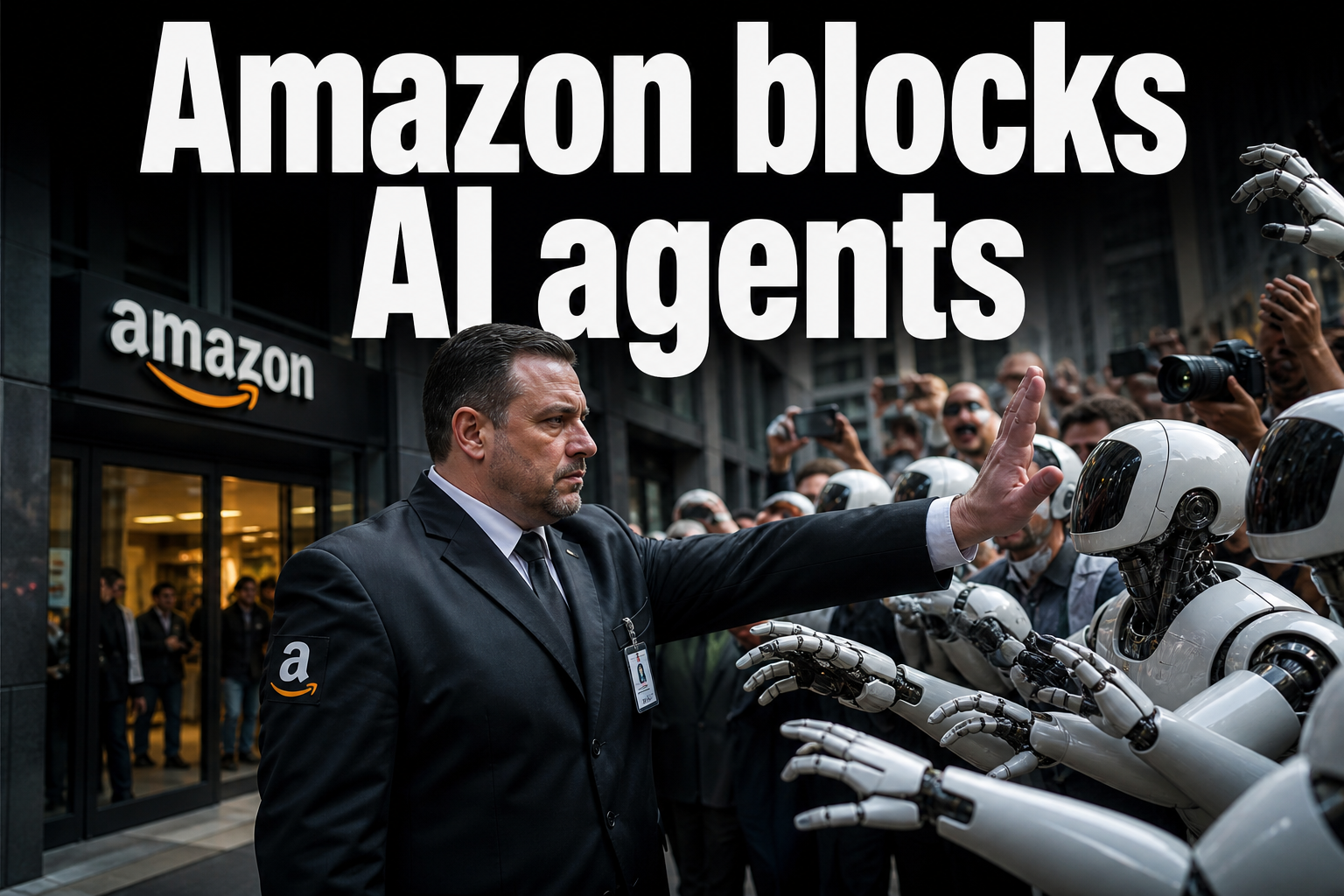
Amazon Blocks Muse’s Access to Its Shopping Platform
Amazon stated that it would block Muse from accessing its shopping platform.The reason is clear.If an unauthorized AI agent performs shopping on behalf of another company, it could weaken the platform’s control.Simply put, Amazon’s position is: “We will manage our own customer data and purchase process.”
The Real Reason Platforms Do Not Welcome AI
AI agents improve user convenience, but they also change platform revenue structures.This is because ad exposure, search traffic, product recommendations, and click-based revenue could decline.That is why the spread of AI agents is a technological innovation, while at the same time becoming a threat to existing platforms.
Shopify Chooses Opportunity Instead
Shopify, a Canadian e-commerce solutions company, allowed Muse users to use its payment method, Shop Pay.Because Shopify’s structure helps individual brands operate their own online stores, integration with AI agents can actually become an opportunity to increase revenue.This difference is a good example of which side of the ecosystem companies may choose in the AI era.
Same AI, Different Strategies
Amazon chose control and defense, while Shopify chose openness and adoption.This difference could create major gaps in market share, customer experience, and transaction volume over the long term.In the AI agent era, not only technology but also “who you connect with” becomes a source of competitiveness.
5. The Core Points You Must Watch in This News: Points Other Articles Often Miss
First, the Real Competition Is Not Chatbots but the “Right to Act as a Purchasing Agent”
Most people still see AI only as a conversational service.But the bigger battle is about what AI can execute on your behalf.The next-stage core point is who controls areas where money changes hands, such as email, reservations, payments, and shopping.
Second, the Value of AI Explodes Not from the Model but from the Distribution Network
Meta’s strength lies more in its social media distribution network than in AI itself.If AI is embedded inside apps already used by hundreds of millions of people, the installation barrier nearly disappears.In other words, the future AI winner may not necessarily be the company with the smartest AI, but the company that makes AI the easiest to use.
Third, AI Agents Redistribute the Profits of Platforms
If AI acts as an intermediary and performs tasks on behalf of users, the existing internet economy centered on search advertising and click inducement could be disrupted.This is not just a technological shift, but a change in the flow of money across digital advertising, e-commerce, and app ecosystems.That is why this issue should be viewed not as Meta stock news, but as news about structural change in the internet economy.
Fourth, Consumer Behavior Data Becomes the True Source of AI Competitiveness
As data accumulates on what emails Muse sends, what shopping it performs, and what reservations it makes, AI becomes smarter.This leads to better personalized recommendations, higher automation accuracy, and improved service conversion rates.Ultimately, the next battlefield in AI will be the accumulation of lifestyle data rather than model size.
6. Global Economic Outlook and AI Trends to Watch Going Forward
U.S. Stock Market: A More Selective Market Centered on AI Beneficiaries
Going forward, the U.S. stock market is unlikely to be a market where everything rises indiscriminately. Instead, differentiation is likely to strengthen around companies that can connect AI to actual earnings.Companies like Meta, which have large user bases and can connect AI to revenue, may show relatively stronger performance.
Technology Stocks: Rechecking Demand for Semiconductors, Cloud, and Data Centers
As AI agents increase, demand for computing and data processing will also grow.This means investors must look not only at software, but also at semiconductors, cloud, server infrastructure, and power-related industries.The AI trend is no longer only a software story.
E-Commerce: A Collision Between Platform Defense and AI Openness
As more platforms adopt defensive strategies like Amazon, the spread of AI agents could slow.On the other hand, platforms that choose open strategies like Shopify may rapidly expand their transaction ecosystems.In the future, AI-friendly platforms could gain an advantage in the e-commerce market.
Consumer Market: Once AI Enters Daily Life, Usage Frequency Can Rise Sharply
Chatbots were tools people used occasionally, but agents are tools that attach themselves to everyday life.This difference could significantly change usage rates, subscription models, and commerce conversion rates.In other words, the next growth point for AI is not a “one-time experience,” but a “daily habit.”
7. Summary from an Investor’s Perspective
Meta Has Now Shown the Possibility of Connecting Its AI Story to Earnings
This success has shown that Meta can be re-evaluated not merely as a social media company, but as an AI platform company.The sharp rise in its stock price is the result of that expectation being reflected in numbers.
Amazon Is Defensive, Shopify Is Open
Even with the same AI agent, some platforms block it while others accept it.This strategic difference could lead to major gaps in transaction volume, user experience, and market share in the future.
The Core Point Is That AI Has Moved from “Answering” to “Executing”
This is the essence of the news.And this shift can simultaneously shake the global economic outlook, Nasdaq, growth stocks, digital advertising, and e-commerce.When looking at the AI trend going forward, investors should consider not only model performance, but also real task automation, payments, distribution, and platform strategy.
[Related Articles…]
- Core Points of Platform Competition Being Reshaped by AI Agents
- Why Meta’s Stock Surge Shows AI Monetization Is Becoming Real
*Source: https://www.hankyung.com/article/202609220575i
Leave a Reply