
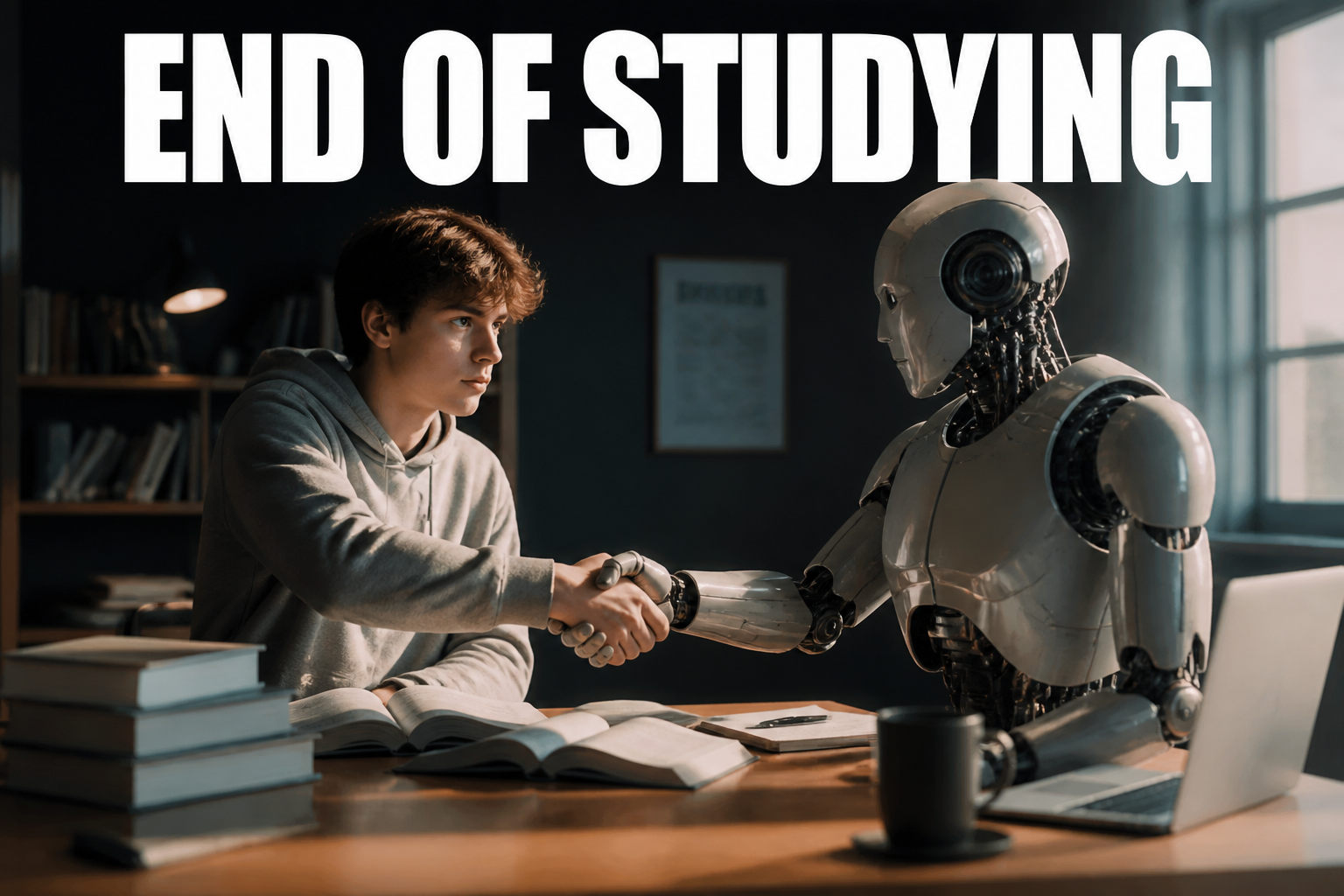
● AI Endangers Education Jobs
The Future of Education in the AI Era: A Warning That “The End of Studying” Could Come for the Majority
Artificial intelligence is changing education much faster than expected.
The core point of this discussion is not simply “how to use AI well,” but that the value of studying, educational inequality, fairness in exams, digital addiction, and the future structure of talent may all be reorganized at once.
What many people especially miss is that AI can become a convenient tool while, at the same time, working in a direction that weakens learning motivation and social mobility for the majority.
1. A Former Global Big Tech AI Scientist’s View of the Fundamental Change in Education
Author Johanna Joo has worked for more than 25 years in the global big tech industry as a data scientist and AI practitioner.
She has directly experienced changes from before generative AI entered industrial workplaces to the present, and based on that experience, she believes today’s education system could be fundamentally shaken.
The core point is not that “AI helps with studying,” but that the very structure in which people expected upward mobility through studying may weaken.
In other words, the future may not be an era in which anyone who studies hard can gain similar opportunities, but one in which only a small group of elites receive more refined education and technical training, while the majority begin to doubt the usefulness of studying itself.
2. “The End of Studying” Comes First Not for Everyone, but for the Majority
The most striking message is the outlook that “the end of studying may apply to the majority.”
This does not mean that studying will completely disappear.
More precisely, it means that the belief that one can achieve social advancement through studying may weaken among many people.
Top-tier professionals, core engineers, managers, and researchers will still be needed.
However, many others are likely to ask, “If AI can do it anyway, why should I learn this deeply?”
If this trend accumulates, education may change from a ladder for everyone into a selection system that more precisely develops a small upper tier.
3. The Real Threat in the AI Era Is Not Technology, but the Collapse of Learning Motivation
Many people see the threat of AI only in automation, job replacement, and productivity improvement.
However, the more fundamental problem is the collapse of learning motivation.
When AI provides answers too quickly, humans can easily skip the training gained through the process.
It may feel convenient at first, but over time, thinking ability, concentration, self-direction, and problem-solving skills may weaken.
In other words, AI is a tool that provides knowledge, but it can also become a tool that makes people use their growth muscles less.
This issue is likely to emerge as one of the most important variables in education, hiring, and job competency assessment going forward.
4. What Exam Cheating Controversies Reveal About a Sensitive Point in Korean Society
Recent cases of exam cheating using AI and ultra-small devices are not merely isolated incidents.
They are signals showing how sensitively Korean society responds to fairness issues in the AI era.
Author Johanna Joo noted that such phenomena appear globally, but in Korea, the impact is greater because there is a particularly strong expectation that success should be achieved fairly through legitimate procedures.
What matters here is not only cheating itself, but the fact that as technology develops, the reliability of evaluation and a fair competitive structure may collapse.
Going forward, the core point is likely to become not simply “let’s block AI,” but how to redesign exams and hiring systems.
5. The Core Point of Children’s Education Is “Distance” and “Observation” Rather Than “Restriction”
From this person’s perspective, the most practical advice is not to completely ban children from using AI and smartphones, but to create appropriate distance.
In particular, she believes short-form videos and algorithmic recommendation feeds can be highly addictive for developing children.
Therefore, what matters is not simple control, but carefully observing children’s daily habits, interests, and even what they seek out when they are bored.
In other words, rather than creating a structure in which parents simply shout “Don’t do that,” it is more important to build a system in which children manage their time and regulate their desires on their own.
This is a necessary direction for education and parenting going forward.
6. Algorithms Can Function Like “Junk Food for the Mind”
Johanna Joo described AI algorithms as “junk food for the mind.”
This metaphor is quite important.
Junk food tastes good and feels convenient in the moment, but it can harm health in the long term.
Likewise, algorithm-based content is fast and convenient, but excessive exposure can negatively affect depth of thought, concentration, autonomy, and emotional regulation.
Therefore, the core competency in the AI era is not simply “how much you use AI,” but how efficiently and only as much as necessary you use it.
This perspective can become a very important standard in personal productivity, digital well-being, and education strategies going forward.
7. In the AI Era, the Body, Relationships, and Offline Experiences Become Even More Important
One of the most unexpected but important messages in this discussion is that as the future becomes more AI-centered, the value of human activities may actually increase.
Moving the body, meeting people in person, calling friends, and spending time together can have a greater impact on emotional stability and happiness.
In other words, the smarter AI becomes, the more humans need to return to being social beings.
This is not simply an emotional statement, but a core factor that will determine mental health, education design, and quality of life in the AI era.
Going forward, offline routines and relationship management skills may become as important as digital capabilities.
8. The Future of Publishing, Writing, and Art Changed by AI
She expects that writing, images, and publishing markets created by AI will become increasingly familiar.
However, this trend does not mean the end of human creativity.
Rather, creators and companies that use AI as a tool to produce faster, more refined, and greater results are likely to emerge.
At the same time, the acts of writing and drawing themselves can still remain human pleasures.
In other words, even if AI takes over the initiative in creation, the desire to create, taste, and individuality will still belong to humans.
9. Core Points That Are Not Often Discussed Elsewhere
There are three key takeaways in this discussion that are very important but often overlooked.
First, AI is not merely a technological change; it can change the class structure of education.
Second, the future problem is not just the ability to use AI, but the self-management ability to avoid being consumed by AI.
Third, real competitiveness may come not from more information, but from the ability to protect concentration, relationships, the body, and the rhythm of daily life.
This is the core point that connects education, labor, consumption, publishing, and the content industry.
10. Key Interpretation for Blog Readers
What is needed now is neither blindly praising AI nor blindly fearing it.
What matters is using AI while creating a structure in which you do not lose control.
Students need to change the way they study,parents need to redesign their children’s digital usage habits,and workers need to use AI as a tool while maintaining thinking ability and judgment.
Ultimately, the winners of the AI era are likely not those who use technology the most, but those who do not lose the direction of their lives within technology.
< Summary >
AI improves the efficiency of education, but for the majority, it may weaken the value of studying and expectations for social advancement.
Going forward, the core point will be not only AI usage skills, but also fairness, concentration, self-management, and the ability to protect offline relationships.
For children’s education, distance and observation are more important than restriction, and adults need digital balance that reduces algorithm addiction.
The decisive factor in the AI era is not more technology, but how to preserve a human way of life within technology.
[Related Articles…]
How AI Is Changing the Future of Education
How to Reduce Algorithm Addiction in the Digital Era
*Source: https://www.hani.co.kr/arti/culture/book/1289514.html
Leave a Reply